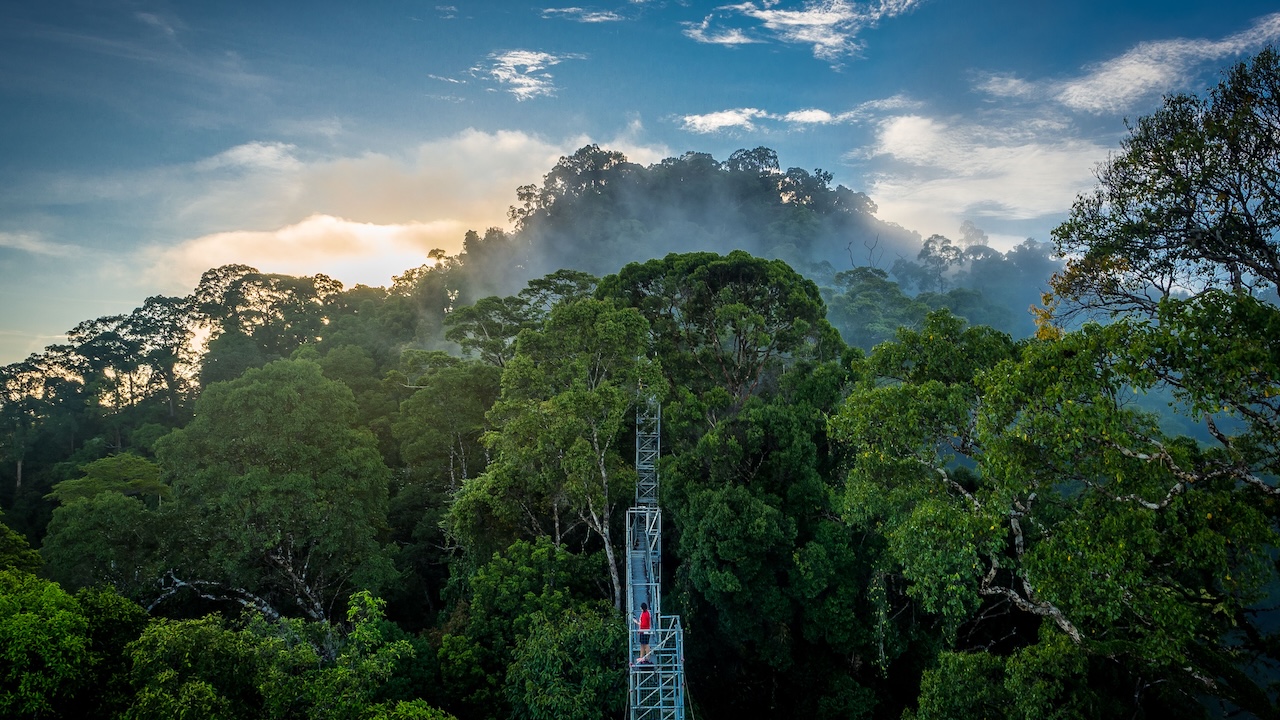
The Sultanate wants to green its economy, not just for growth but to stay competitive amid a global economy increasingly going green. Photo credit: Courtesy of Ministry of Finance and Economy, Brunei Darussalam.
Oil-rich Brunei Darussalam is preparing for a greener future as it seeks to reduce reliance on fossil fuels and ensure resilience amid declining oil production, climate risks, and oil price volatility.
The oil and gas sector accounts for more than 50% of the country’s gross domestic product and more than 90% of exports, making economic diversification a priority for the Southeast Asian country. But the Sultanate also wants to green its economy, not just for growth but to stay competitive amid a global economy increasingly going green.
The Green Economy Agenda of Brunei Darussalam, a case study published by the United Nations Economic and Social Commission for Asia and the Pacific (ESCAP) last April, cites progress in the country’s green economy initiatives, noting a growing policy momentum and institutional engagement. It notes how the country has embedded its green economy strategy in the national development vision.
By embedding the strategy in national policies enshrined in the Brunei Economic Blueprint, Brunei Vision 2035, and the Brunei National Climate Change Policy, the country now has an integrated framework for aligning economic diversification with environmental goals, says the report.
Urgent transition
“Transitioning Brunei Darussalam toward a green economy is urgent,” says the green economy framework commissioned by the United Kingdom’s Foreign, Commonwealth and Development Office and prepared by global consultancy Arup for Brunei Darussalam.
The report estimates the country could lose up to 58% of its gross domestic product (GDP) under a 1.5° Celsius warming scenario.
Given the climate threat, the report said the country needs to address its activities in the oil and gas and related sectors to minimize economic risk and capture the widest range of opportunities that are available to future-proof the economy. It identified four high potential opportunities to green the economy and lay the foundation for further green economy development and economic diversification. These are:
- transition to renewable energy;
- carbon capture and storage services;
- clean hydrogen export hub; and,
- commercial and industrial waste recycling.
By 2050, the four green economic opportunities could generate an additional annual gross value added of BND 1.0 billion ($782.46 million), a 7.8% increase from the country’s GDP in 2022. Green industries could also create 10,000 to 16,000 jobs and reduce emissions by 3.8 million to 6.2 million tonnes of carbon dioxide equivalent annually.
Amid the climate challenge, the government continues to push the country’s green economy agenda. In January, it sent a mission to the UK to strengthen the two countries' collaboration on the green economy. Brunei Darussalam has been collaborating with the UK in finding pathways for balancing economic growth, energy security, and nature protection, according to a statement from the Ministry of Finance.
Notably, the press release said the mission also included representatives from Brunei Darussalam’s decommissioning industry. With the maturing of the country’s oil and gas industry, the government is now looking at ways to generate economic opportunities from oil and gas fields that are approaching the end of their production lives. The mission explored offshore energy operations, industrial decarbonization, and the responsible management of late-life oil and gas assets. The country seeks to learn from the UK’s experience in managing late-life offshore assets, advancing the transition toward lower-carbon energy systems, and developing decommissioning as a structured, safe, and economically viable sector.
Insights from the mission are seen to contribute to efforts to strengthen institutional frameworks, enhance technical competencies, and build long-term ecosystem readiness in support of sustainable economic development and the objectives of the Brunei Green Economy Framework.
Green initiatives
According to the release, there is now stronger coordination across the Ministry of Finance and Economy, the Department of Energy, and the Brunei Climate Change Office to advance the country’s green economy agenda.
The country is also scaling up solar energy adoption, exploring the use of floating solar, improving energy efficiency, and enabling the strategic use of gas for higher-value industrial activities. Brunei Darussalam is also managing forests and mangroves under a global framework to protect these natural assets as part of the Paris Agreement.
The ESCAP case study, meanwhile, says embedding the green strategy in national frameworks provides long-term investment signals that the Brunei Economic Development Board uses to attract green investments. It also noted initiatives such as introducing environmental, social, and governance-compliant financial products and strengthening regulatory frameworks in emerging sectors like hydrogen and biofuels.
It says the country’s solar projects mark a milestone in its green economy ambitions as they provide practical examples for scaling low-carbon infrastructure and refining regulatory and financial frameworks to attract additional private investment. The projects also show growing implementation capacity.
The report notes encouraging signs of investor interest, with foreign direct investments (FDI) inflows showing a modest rebound in 2024, amounting to $25.4 million following a net outflow in 2023. However, the data does not yet confirm a tangible shift of capital toward green sectors. FDI remains concentrated in manufacturing, mining and quarrying, and finance—sectors the report says could evolve to support green transition priorities with the right enabling environment.
However, comprehensive data on investment volumes, operational performance, and socio-economic impacts remain limited, reflecting the early stage of the country’s green infrastructure development, says the report. It notes implementation challenges, including limited technical expertise in biofuels and underdeveloped regulatory mechanisms for integrating private investment.
To move from preparatory work to actual project implementation, Brunei Darussalam needs tools that reduce risk and improve project visibility for investors. “Advancing further investment will depend on establishing a robust pipeline of investable projects, enhancing risk-sharing mechanisms, and expanding targeted outreach to prospective investors,” the report says.