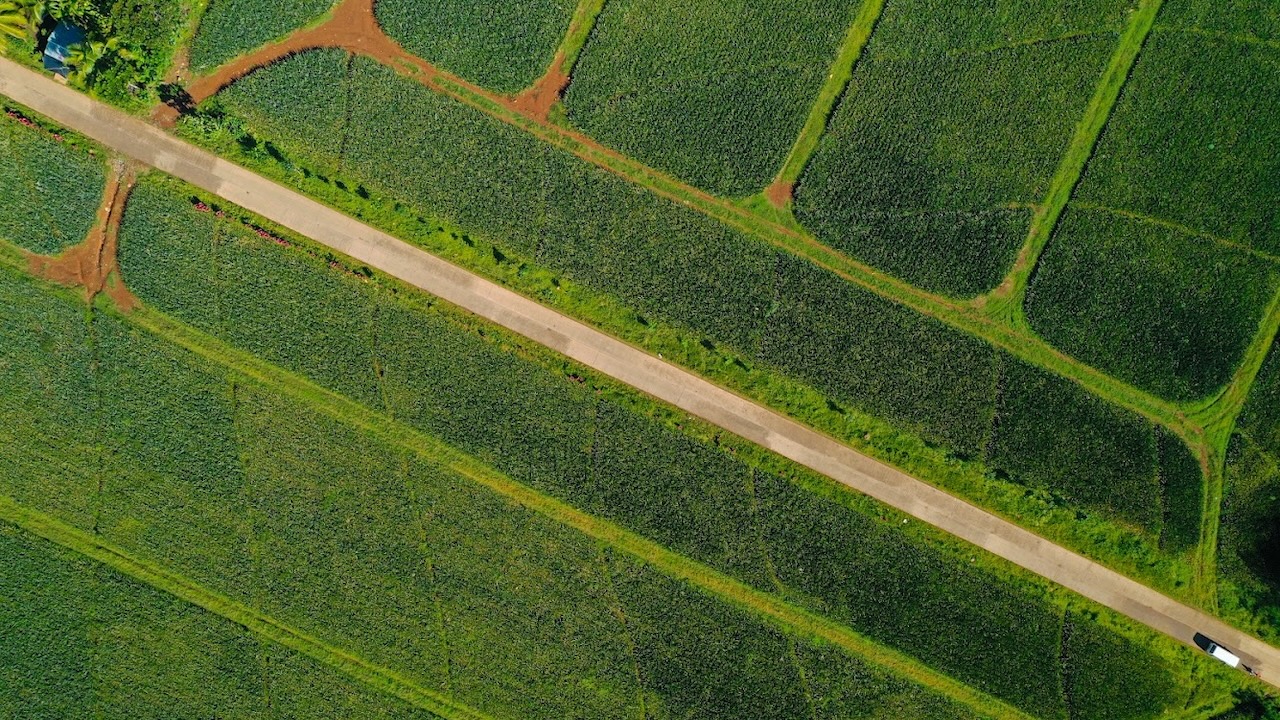
Linking the three Davao provinces entails building farm-to-market roads to ensure farmers' access to markets. Photo credit: Courtesy of the Mindanao Development Authority.
The Philippines is integrating air, land, and sea connectivity across three provinces in Southern Mindanao to create a gateway corridor with direct access to BIMP-EAGA markets. Davao de Oro, Davao Oriental, and Davao Occidental provinces will form a gateway for trade, tourism, and investments in the subregion, said the Mindanao Development Authority (MinDA).
To advance the plan, Philippine officials, including MinDA representatives, recently met with counterparts in Manado, the capital of North Sulawesi, Indonesia, to strengthen cooperation. During the talks, Indonesian carrier TransNusa expressed readiness to service the Manado–Davao route pending a market viability study and regulatory requirements. The Philippines also secured tourism and trade cooperation commitments from their host. These support Mindanao’s plans for the gateway corridor.
Linking the three Davao provinces is part of the government’s Integrated Air, Land, and Sea Infrastructure Program, which connects production zones, tourism destinations, airports, and seaports into priority corridors. The initiative includes developing strategic gateways that would link Mati in Davao Oriental with Maragusan in Davao de Oro; Cateel in Davao Oriental with Compostela in Davao de Oro; and Monkayo in Davao de Oro with Boston in Davao Oriental.
MinDA said legislators, regional directors, local government units (LGUs), and private stakeholders have pledged to operationalize the Gateway Connectivity Council and Program Management Unit to fast-track coordination, route activation, and corridor branding.
“This is what MinDA has been championing—an integrated alliance of Mindanao’s regions, provinces, and LGUs [local government units], positioning the island region as the strategic gateway to BIMP-EAGA,” said MinDA Assistant Secretary Romeo Montenegro at last month’s Bulawan Festival Investment and Tourism Forum in Nabuntaran, Davao de Oro.
Economic corridor strategy
The plan for the three Davao provinces aligns with BIMP-EAGA’s strategy to develop economic corridors to better direct infrastructure investments to well-defined geographic spaces in the subregion.
Under BIMP-EAGA’s economic corridor strategy, the three Davao provinces are part of the North–South Economic Corridor (NSEC), which covers mainland Mindanao and the whole of Sulawesi. Apart from the three Davao provinces, the corridor also covers Agusan del Norte, Agusan del Sur, Bukidnon, Camiguin, Davao del Norte, Davao del Sur, Davao Occidental, Dinagat Islands, Lanao del Norte, Lanao del Sur, Maguindanao del Norte, Maguindanao del Sur, Misamis Occidental, Misamis Oriental, North Cotabato, Sarangani, South Cotabato, Sultan Kudarat, Surigao del Norte, and Surigao del Sur in Mindanao; and the provinces of Central Sulawesi, Gorontalo, North Sulawesi, South Sulawesi, Southeast Sulawesi, and West Sulawesi in Indonesia.
The NSEC is a maritime corridor and has an existing barter trade, with high potential for agribusiness, food, and fish processing. Apart from opportunities as a tourism corridor, it is also considered an environment corridor with some areas identified as ecological frontiers.
Local government support
Local governments in the Davao Region strongly support the plan to link the Davao provinces. The mission to Manado, in fact, included 30 participants from the Davao Region, including local chief executives and officials from the Department of Tourism and the Department of Trade and Industry.
Davao de Oro Governor Raul Mabanglo affirmed the province’s support for investors and inter-provincial collaboration to accelerate tourism and agribusiness growth under the unified gateway strategy. "Davao de Oro is ready to support those who want to invest in business and tourism in our area. We are committed to meeting the needs of the people,” said Mabanglo at the Nabuntaran forum.
During the trade talks in Manado, MinDA said Maricar Zamora-Mabanglo, a congresswoman from Davao de Oro, stressed the need to create more trade opportunities, particularly for agricultural produce and value-added products from Davao de Oro, Davao Oriental, and Davao Occidental. She said increased trade could help maximize load factors of airlines that may eventually serve the Mati route. The Mati Airport is set to reopen this year after undergoing upgrades.
According to MinDA, the delegation aimed to conduct scoping activities to identify tourism circuits, explore complementary trade products, and encourage airlines and shipping companies to resume direct routes. These efforts aim to build sustainable passenger and cargo demand while expanding business opportunities.
Proposed tourism circuits include dive tourism in Bunaken and Davao Oriental, coastal and island destinations in Mindanao, and inland cultural and eco-tourism experiences.
Mission results
Montenegro said the talks in Manado represent a major step toward restoring air connectivity between Mindanao and Indonesia. “We will be providing further data to TransNusa, along with other requisites that need to be worked out with our civil aviation authorities and national government agencies to ensure the connectivity will be viable and sustainable,” he said.
MinDA is set to coordinate with the Civil Aviation Authority of the Philippines and the Civil Aeronautics Board for the application of BIMP-EAGA support policies, while determining passenger demand, cargo volume, and operational support needed to sustain the direct flight.
The Manado–Davao service was halted in 2020 due to COVID-19. At the time, Garuda Indonesia was operating the route.
Aside from air connectivity, the mission also produced concrete cooperation initiatives between the Davao Region and North Sulawesi. These include a letter of intent from Governor Generoso, a municipality in Davao Oriental, to partner with Miangas, the northernmost island of the Indonesian province, and the coastal city of Bitung in fisheries, agriculture, and trade. There is also a commitment from North Sulawesi to send a delegation to Davao within the year.
Tourism cooperation was also strengthened, with both sides agreeing to develop cross-border tour packages to boost travel and support the proposed Davao–Manado air route.
“We now see stronger private sector interest and expanded economic activity on both sides, which provides the commercial viability needed for this connectivity project to move forward,” Montenegro said.
Financing
To ensure funding for such initiatives, MinDA has pushed for a bigger allocation of Mindanao’s annual budget.
The whole of Mindanao is allocated 1.029 trillion pesos (about $17 billion) from the national budget this year. The Davao Region is allotted 179 billion pesos, with about 26.98 billion pesos set aside for projects under the Department of Public Works and Highways.
As of May 2025, big-ticket priority infrastructure projects directly benefiting the Davao Region include the $1.49-billion Mindanao Railway; the $1.33-billion Davao Public Transport Modernization: Davao City to Panabo City; and the $841.3-million Davao City Bypass Construction: Davao City to Panabo City.