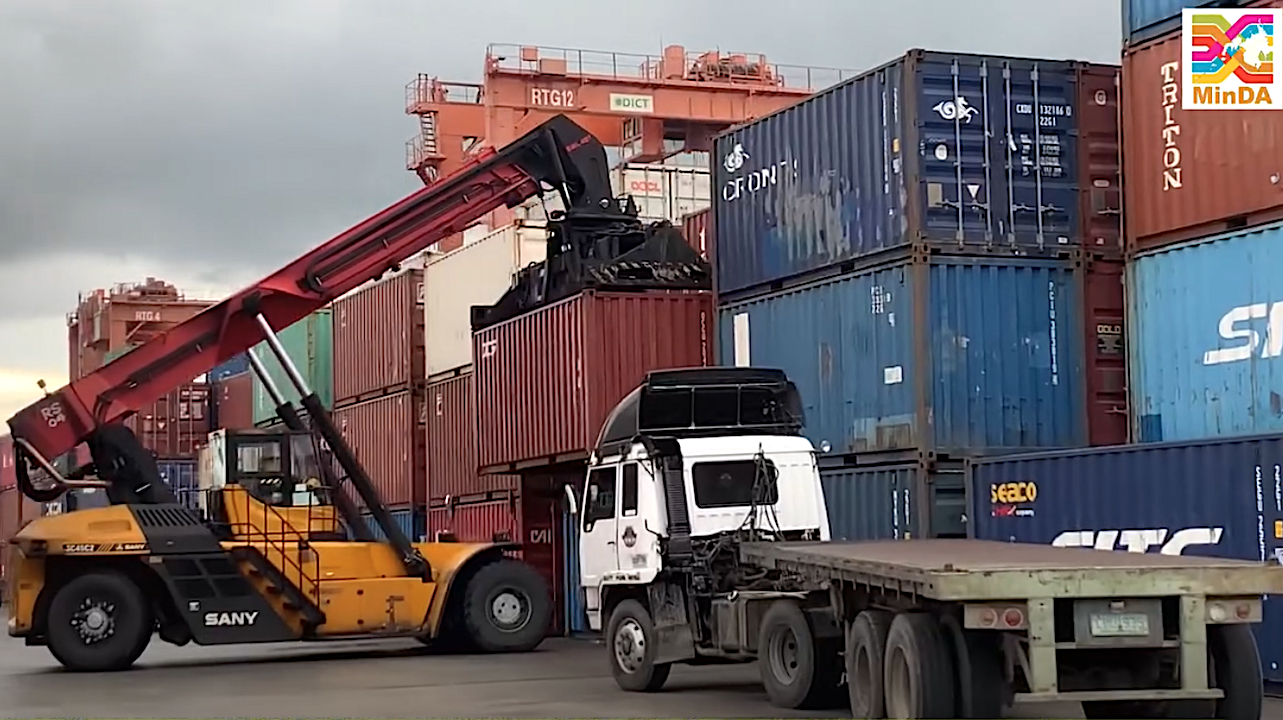
Mindanao wants to improve transport and logistics to support tourism and agriculture, while reinforcing the enabling business environment for sustained trade with BIMP-EAGA, ASEAN, and the rest of the world. Photo credit: Courtesy of the Mindanao Development Authority.
Mindanao plans to accelerate the development of special economic zones (ecozones) and is ensuring the sites are strategically located in growth centers supported by transport infrastructure, logistics networks, and complementary industries.
There are currently 42 ecozones in Mindanao, accounting for about 10% of the 436 registered nationwide with the Philippine Economic Zone Authority (PEZA), which regulates and also develops ecozones across the country.
More ecozones
Both the Mindanao Development Authority (MinDA) and the Bangsamoro Autonomous Region in Muslim Mindanao (BARMM) want to add more ecozones to attract investors, create jobs, and spur sustainable development.
In February, MinDA signed a memorandum of understanding (MOU) with PEZA to strengthen collaboration in ecozone development, fast-track priority projects, and open wider investment opportunities across the island-region. In announcing the agreement, MinDA said it wants to develop ecozones across strategic locations under the Mindanao Development Corridors Program, which aims to integrate transportation, trade, tourism, and investment across key provinces.
Mindanao’s corridors program aims to improve transport and logistics to support tourism and agriculture, while reinforcing the enabling business environment for sustained trade with BIMP-EAGA, ASEAN, and the rest of the world. The program seeks to maximize Mindanao's economic potential by aligning investments with the comparative advantages of specific areas. It promotes industry development, improved transport and logistics, investment facilitation, and stronger institutional support in three development corridors—Northern, South-Central, and Western Mindanao. Each corridor builds on its strengths—from manufacturing and logistics in the north, to agriculture and agribusiness in the south-central corridor, and fisheries, mariculture, and cross-border trade in the west, creating a more integrated and competitive regional economy.
For PEZA, agriculture and "green ores" such as nickel are target sectors for new Mindanao ecozones. PEZA considers the island-region among the growth areas for new ecozones, which need a minimum of 25 hectares and investment of 1 billion to 2 billion pesos ($16.3 million to $32.7 million).
BARMM is also prioritizing the development of ecozones to attract long-term investments in the Bangsamoro region. In December, Sukarno Abas, Bangsamoro Economic Zone Authority (BEZA) executive director, urged investors to locate in BARMM, noting its suitability for halal agro-industrial and agriculture enterprises. In particular, he cited the Polloc Freeport and Economic Zone in Parang, Maguindanao del Norte, which is considered as the region’s flagship logistics and industrial hub.
Proposed sites, meanwhile, include the WOW Matanog Special Economic Zone or Bangsamoro Halal Park in Matanog, Maguindanao del Norte; a maritime and tourism zone and a modern freeport and logistics hub in Tawi-Tawi that will position the island-province as BARMM’s gateway to BIMP-EAGA; agro-industrial hubs in Cotabato City and Lamitan City in Basilan; and an agricultural ecozone in Wao, Lanao del Sur.
“Through these economic zones, BEZA aims to generate decent employment, stimulate local industries, enhance value-adding activities, and contribute to both regional and national economic growth, while ensuring that benefits directly reach Bangsamoro communities,” Abas said.
Enhancing regional connectivity
Mindanao’s strategy aligns with BIMP-EAGA’s plan to accelerate regional connectivity and integration through enhanced cooperation in economic zones.
The subregion is establishing an Economic Zones Working Group to provide a dedicated platform for strengthening coordination among stakeholders on ongoing and planned economic zone initiatives. It will align the development of ecozones with strategies under the BIMP-EAGA Vision 2035 to develop the subregion’s reconfigured, expanded, and interlinked economic corridors and create a single market and production base. This involves increased cooperation to improve policy coordination, regulatory harmonization, systems integration, data and knowledge sharing, and transparency and monitoring. Joint promotion and marketing will also strengthen BIMP-EAGA’s positioning to attract investors.
With economic zones across BIMP-EAGA expanding in number and scope, they now have the potential to accelerate regional connectivity and integration as well as advance the subregion’s inclusive and sustainable goals.
Long-term benefits
MinDA Chairperson Leo Tereso A. Magno said the tie-up with PEZA will elevate Mindanao’s investment profile by integrating ecozone development with regional development corridors, generating long-term socioeconomic benefits for communities.
The MOU formalizes MinDA and PEZA’s collaboration to promote investments, develop ecozones, and strengthen coordinated planning, business matching, and promotional activities for domestic and foreign investors.
“The agency is working with LGUs [local government units], partner agencies, and private investors to accelerate project implementation and investment conversion,” said Magno.